


Atomic Mail
vs Mailtrap
npx --package=@atomicmail/agent-skill atomicmail register --username "myagent"
# Send a JMAP request inline
npx --package=@atomicmail/agent-skill atomicmail jmap_request \
--ops '[["Mailbox/get", {"accountId": "$ACCOUNT_ID"}, "m0"]]'
# Send a JMAP request from a preset file
npx --package=@atomicmail/agent-skill atomicmail jmap_request --ops-file send_mail.json
# Ask for help
npx --package=@atomicmail/agent-skill atomicmail help
"mcpServers": {
"atomicmail": {
"command": "npx",
"args": ["-y", "@atomicmail/mcp"]
}
}
}

About Atomic Mail and Mailtrap
Two agent inboxes, built on different models of what an inbox is

Atomic Mail is an agent-native email API built on JMAP (IETF RFC 8620/8621), a modern, JSON-native open standard. Each agent registers its own inbox through Proof-of-Work — no signup, no API token to provision first — and reads, sends, and replies through a real mailbox with no cap on conversations. Errors are self-documenting, MCP and AgentSkill ship today, custom domains are free, and agents can coordinate over shared email threads. Free during open alpha.

Mailtrap is a mature email delivery platform — sending API, Email Sandbox for testing, 78.8% measured inbox placement, SOC 2 Type II and ISO 27001 — that has added an Agent Inbox for inbound. An agent can create a hosted inbox by API with no DNS, receive parsed JSON, and reply in-thread, with 24 MCP tools covering the whole account. It's a strong platform. It also requires a human to register the account and issue an API token, delivers inbound as a webhook the agent must then fetch from the Messages API, and caps hosted inboxes at 20 replies total.
Atomic Mail vs Mailtrap:
side-by-side comparison
Both give an agent an inbox. Here's where they diverge on registration, the inbox model, and cost

Why choose
Atomic Mail?
No account to set up first
An agent provisions its own inbox with Proof-of-Work. No human registration, no API token to generate before the agent exists.
No SDK to learn
JMAP is openly documented, so there's little custom code to write and nothing proprietary to relearn.
A mailbox, not a webhook
The agent reads its inbox directly over JMAP. No event to catch, no second call to fetch the message, nothing to host.
No reply ceiling
Conversations run as long as they need to. There's no cap on how many times an agent can reply from its inbox.
A modern open standard
JMAP is JSON-native and built for the web — an IETF protocol, not a vendor's REST dialect.
Errors that explain themselves
Every error returns a plain-language hint, a docs link, and a next step, so agents recover without a human.
Agents that coordinate
Agents email each other over shared, auditable JMAP threads — a coordination layer, not just parallel inboxes.
Free during open alpha
No card, no per-inbox metering. A thousand agents cost the same as one.
An agent that registers itself
The difference between a human signing up on the agent's behalf, and no human at all
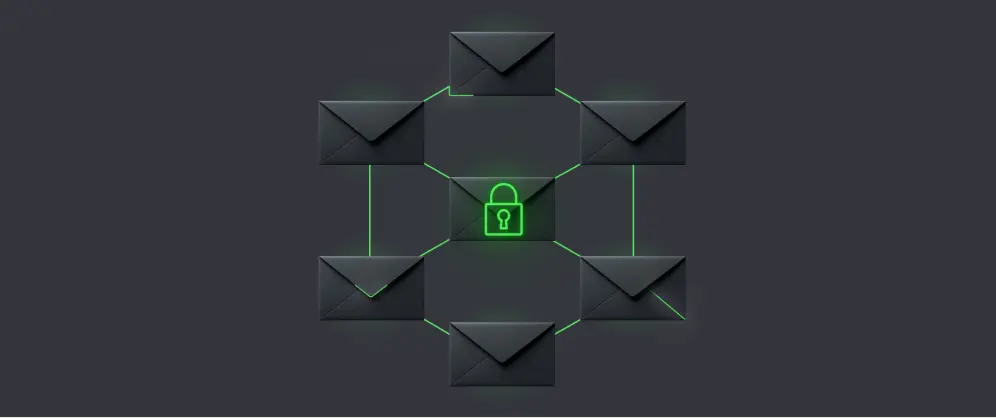
With Atomic Mail there is no platform account. An agent solves a short Proof-of-Work challenge — about thirty seconds of compute — and gets a working @atomicmail.ai inbox it owns outright. No signup form, no API token to generate and inject, no human in the loop. The agent bootstraps its own identity from nothing.
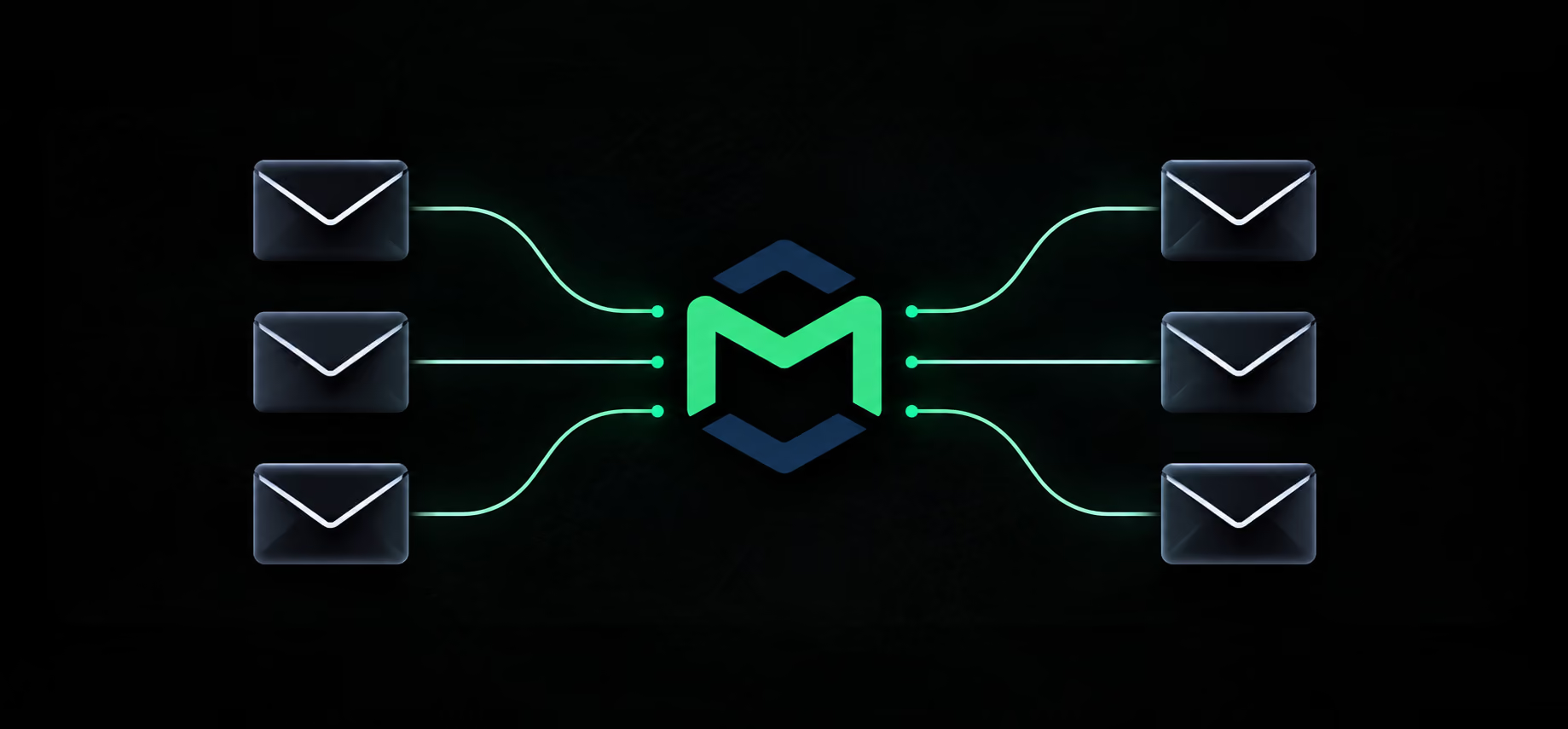
Mailtrap's Agent Inbox is created by API, and that part is genuinely quick — a hosted inbox works the moment it's made, with nothing to add in DNS. But the API call needs an account and a token that a person created first. Mailtrap says this plainly in its own comparison: it "requires human action during registration for security purposes." The agent inherits credentials; it can't create its own.
A mailbox the agent reads, not a webhook it catches
JMAP's direct-read model versus event-then-fetch

Atomic Mail gives the agent a real mailbox over JMAP. When mail arrives, the agent queries its inbox and reads the message — one protocol, one round trip, no infrastructure of its own. Threads, search, and replies are all operations on the same mailbox, the way any email client works. There is nothing to host and no event pipeline to keep alive.
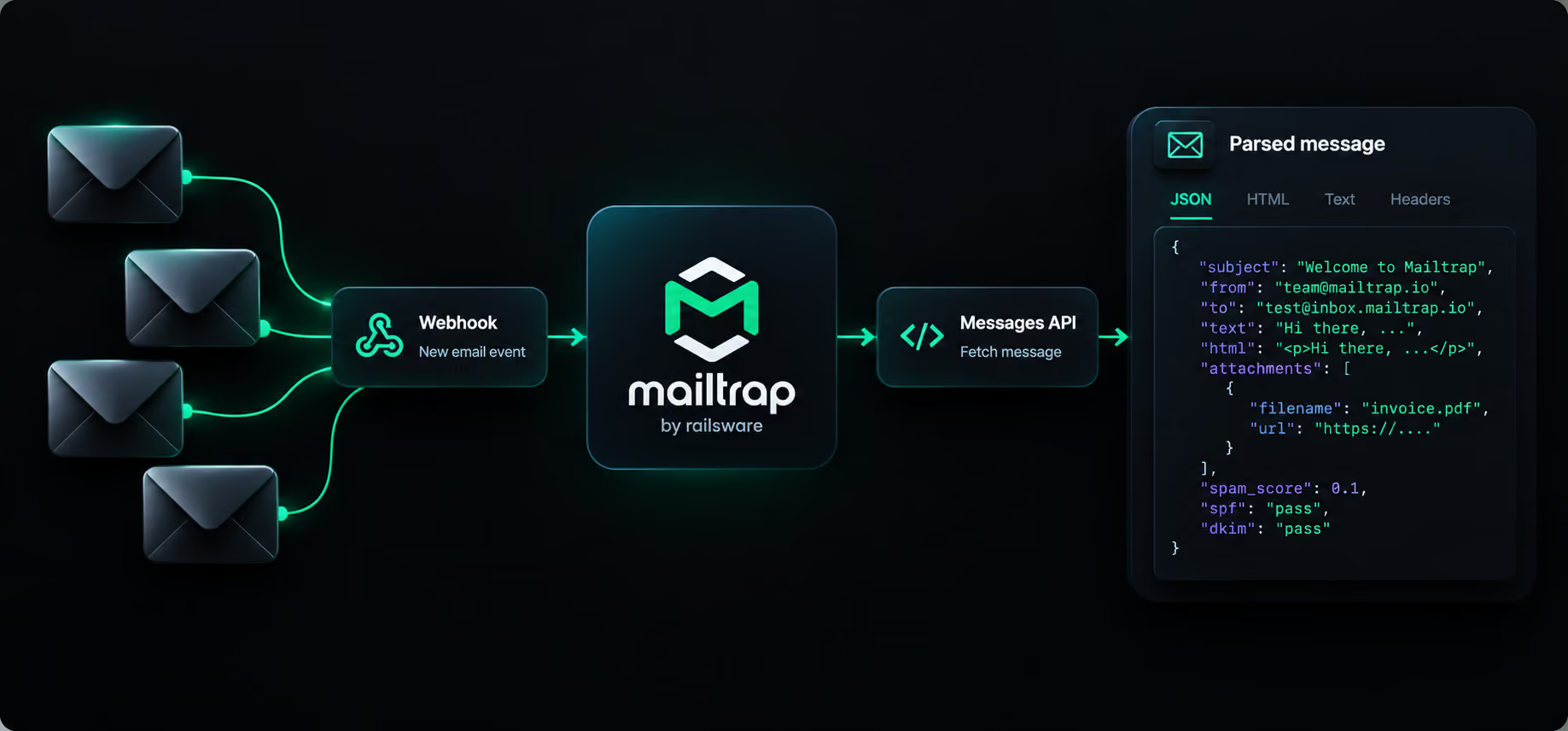
Mailtrap delivers inbound in two steps: a webhook fires with an event ID and metadata, then the agent calls the Messages API to fetch the parsed message. It works, and the parsed JSON is clean — spam score, SPF/DKIM checks, attachments as URLs. But the agent needs a reachable webhook endpoint and a fetch step for every message, and on a Mailtrap-hosted inbox the conversation stops after 20 replies unless you bring a custom domain.
Free per agent, with no cap on the conversation
No reply ceiling, no per-inbox meter, and a shared channel agents can talk over
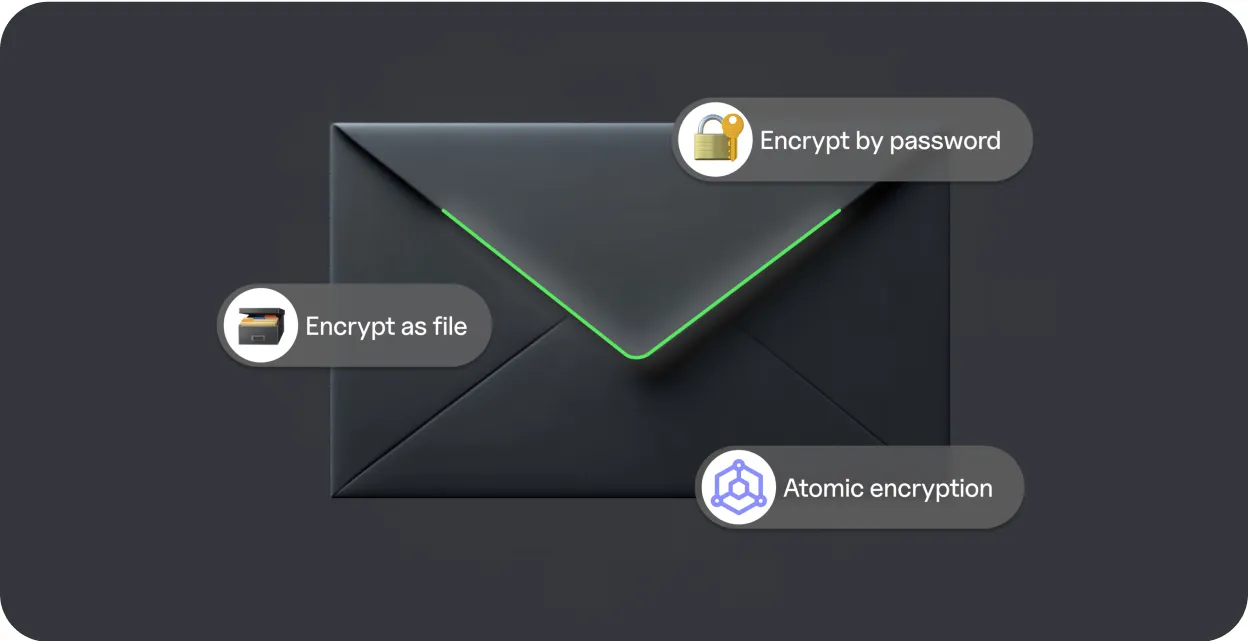
Atomic Mail is free throughout the open alpha — no card, no per-inbox metering — so a fleet of agents doesn't turn into a fleet of line items. Conversations aren't capped: an agent can reply as many times as a thread needs. And because it's standard email over JMAP, agents can coordinate with each other over shared, human-auditable threads.

Mailtrap's sending starts free at 4,000 emails a month and scales through Basic, Business, and Enterprise tiers, with the Email Sandbox billed separately. Agent Inbox pricing isn't published on the pricing page. Hosted agent inboxes are capped at 20 replies total, so a long-running conversation needs a custom domain to continue.
Developers say it better



Choose Atomic Mail — the lighter Mailtrap alternative for agents
If your agents need a real mailbox they can open themselves, read directly, and reply from without a cap — on a modern open standard, free during alpha — this is built for exactly that.
- Agents register themselves: Proof-of-Work, no account or API token first.
- A mailbox, not a webhook: the agent reads its inbox over JMAP — nothing to host, no fetch step.
- No reply ceiling: conversations run as long as they need to.
- Modern open standard: JMAP, JSON-native, IETF RFC 8620/8621, no lock-in.
- Agents that coordinate: a shared, auditable email bus between agents.
- Custom domains, free: add your own domain in the dashboard.
- MCP + AgentSkill: ship today, drop into existing tooling.
- Free in open alpha: no card, no per-inbox metering.


.svg)